Passiflora gardneri
Mast. (1899)


SUBGENUS: passiflora
SUPERSECTION: stipulata
SECTION: granadillastrum
GEOGRAPHICAL DISTRIBUTION OR ORIGIN:
Central-Eastern Brazil.
CRITICAL MINIMUM TEMPERATURE: 8 °C
IDEAL MINIMUM TEMPERATURE: 12 °C
ETYMOLOGY: Dedicated to the Scottish botanist George Garner (1810 - 1849).
He was a plant hunter in the state of Rio de Janeiro.
DESCRIPTION:
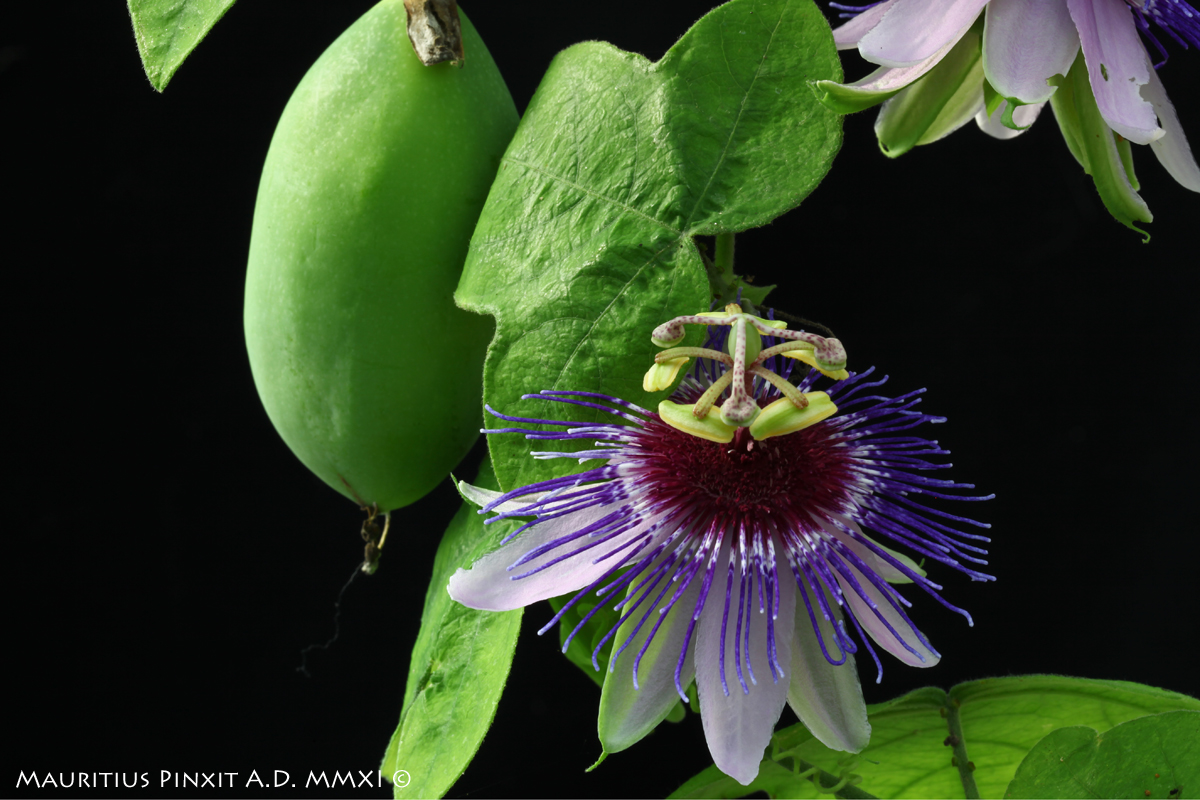
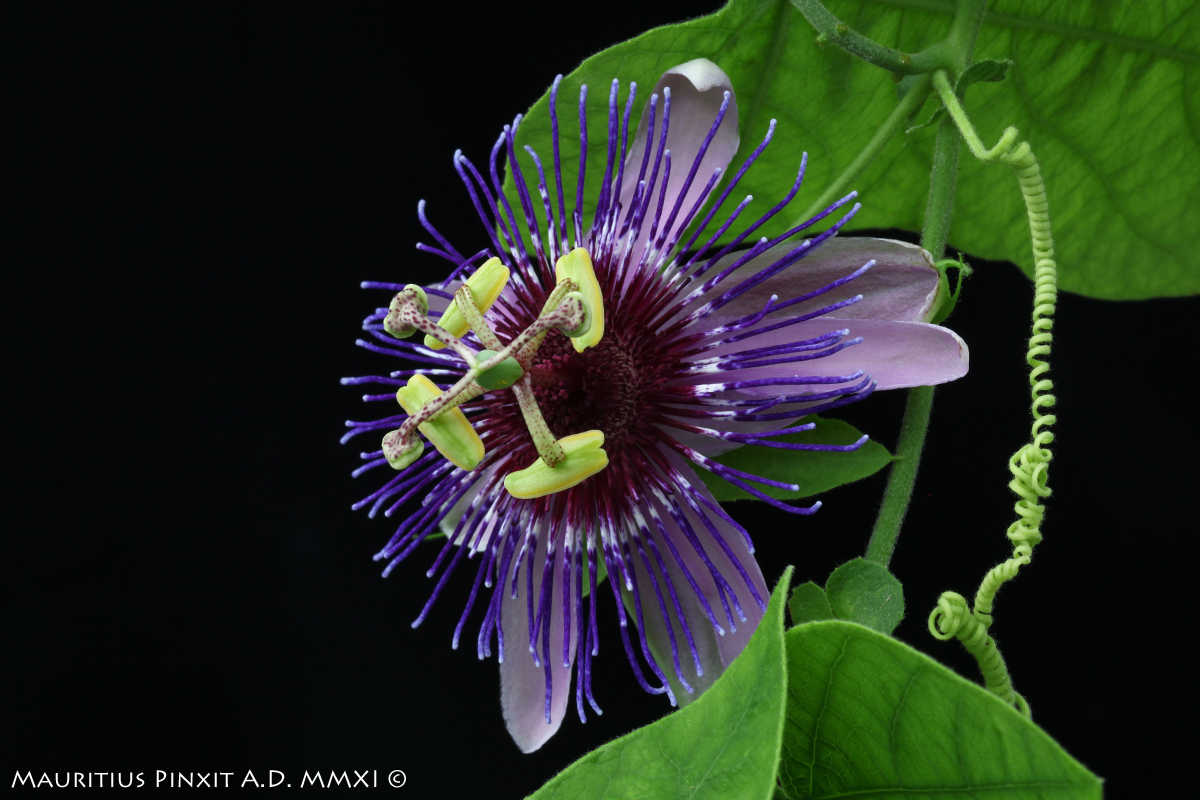
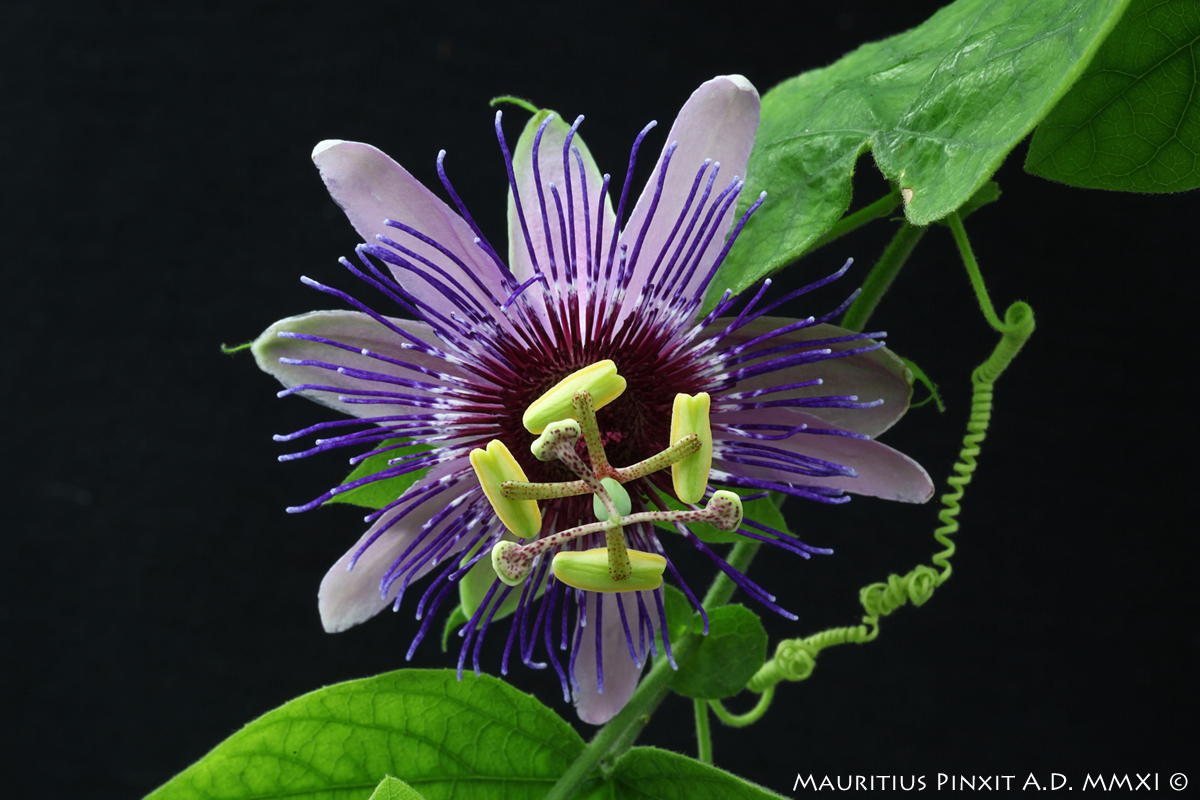
Passiflora gardneri has a corolla of very pale lilac which, towards the centre, takes on a more noticeable pinkish hue. The transition between the two colours is continuous and even, with the lilac becoming paler as it approaches the edges of the petals. The surface of the petals shows a gentle luminosity that enhances the gradation without altering the tones.
The corona is the visual heart of the flower and creates a sharp contrast with the soft colours of the corolla. The central ring is dense, compact and of a very intense reddish purple. From here, after a brief break of white, the orderly array of filaments continues in a lighter violet that remains constant up to the tips, where the colour returns to white.
Overall, the flower combines the delicacy of the corolla, with its shades from lilac to pink, with the chromatic strength of the corona, which introduces deeper and more defined tones. The result highlights the distinction between the two structures and gives visual emphasis to the corona, almost as if indicating to pollinators where the nectar is found.
Passiflora gardneri is a Brazilian species with a confirmed distribution in the states of Goiás and Minas Gerais. Herbarium collections come mainly from inland areas of these two states, in open and well lit zones. These are regions with gentle relief and intermediate elevations, where the landscape alternates between shrubby stretches and breezy clearings. The recorded localities often lie around six hundred metres above sea level, a typical altitude for central Brazil.
This passion flower belongs to the Cerrado biome, the great Brazilian savanna that covers much of central eastern Brazil, characterised by dry seasons, well drained soils and open vegetation. In this environment, composed of shrubs and low trees interspersed with bright open spaces, it finds ideal conditions for growth, flowering and fruiting.
Passiflora gardneri favours bright, warm positions, with direct sun for much of the day and a well drained substrate. Species of the genus generally thrive in full sun or partial shade and require fertile soil that is moist but not waterlogged.
In southern Italy and in the milder coastal regions it can be grown outdoors if planted against a sunny wall protected from cold winds. It is certainly a valid alternative to Passiflora caerulea, without sharing its invasive tendencies.
In areas with harsher winters it is advisable to consider container cultivation, so that the plant can be sheltered in a protected environment during the cold season. In such cases it is useful to reduce watering and ensure good drainage to avoid water stagnation.
Taken as a whole, Passiflora gardneri proves to be an elegant and discreet species, suited to those who seek refined flowering and a plant that blends easily both into gardens of milder regions and into container cultivation.