Passiflora kermesina
Link & Otto (1826)


SUBGENUS: passiflora
SUPERSECTION: stipulata
SECTION: kermesinae
GEOGRAPHICAL DISTRIBUTION OR ORIGIN:
Brasile Orientale, from Bahia to Rio Grande do Sul.
CRITICAL MINIMUM TEMPERATURE: 10 °C
IDEAL MINIMUM TEMPERATURE: 15 °C
SYNONYMS: P. dentata Vell., P. raddiana DC.
ETYMOLOGY: By the color of the flowers in shades of red-crimson.
NOTES: Chromosomes: 2n=18
DESCRIPTION:
Passiflora kermesina, a sister species to Passiflora edmundoi and Passiflora loefgrenii, with which it shares several features, is a plant that captivates collectors thanks to the beauty of its flowers and its lively, generous nature.
It is native to eastern Brazil, where it grows wild from the state of Bahia down to Rio Grande do Sul, and it is regarded as the type species of Section Kermesinae within Supersection Stipulata, which includes at least a dozen related species.
In the wild, it can be found along the edges of coastal forests and in the sunny clearings of the Mata Atlântica, where the warm, humid climate and sandy soils favor the growth of vigorous, evergreen vines. During the rainiest months it produces a dense, glossy-green foliage, while in the dry season it channels its energy into flowering, which may continue for several consecutive weeks.
In the 1980s it was thought to be extinct, since much of its natural range had been destroyed by urbanization and deforestation. Fortunately, two enthusiasts, Reto Gamma (Switzerland) and Axel Frank (Germany), decided to undertake a genuine field search. Reto Gamma, with whom I also traveled in Brazil, told me that after consulting various Brazilian herbaria and historical records, they managed to identify a few untouched areas. From there they collected cuttings and brought them back to Europe, thus allowing the species to survive and spread again among collectors.
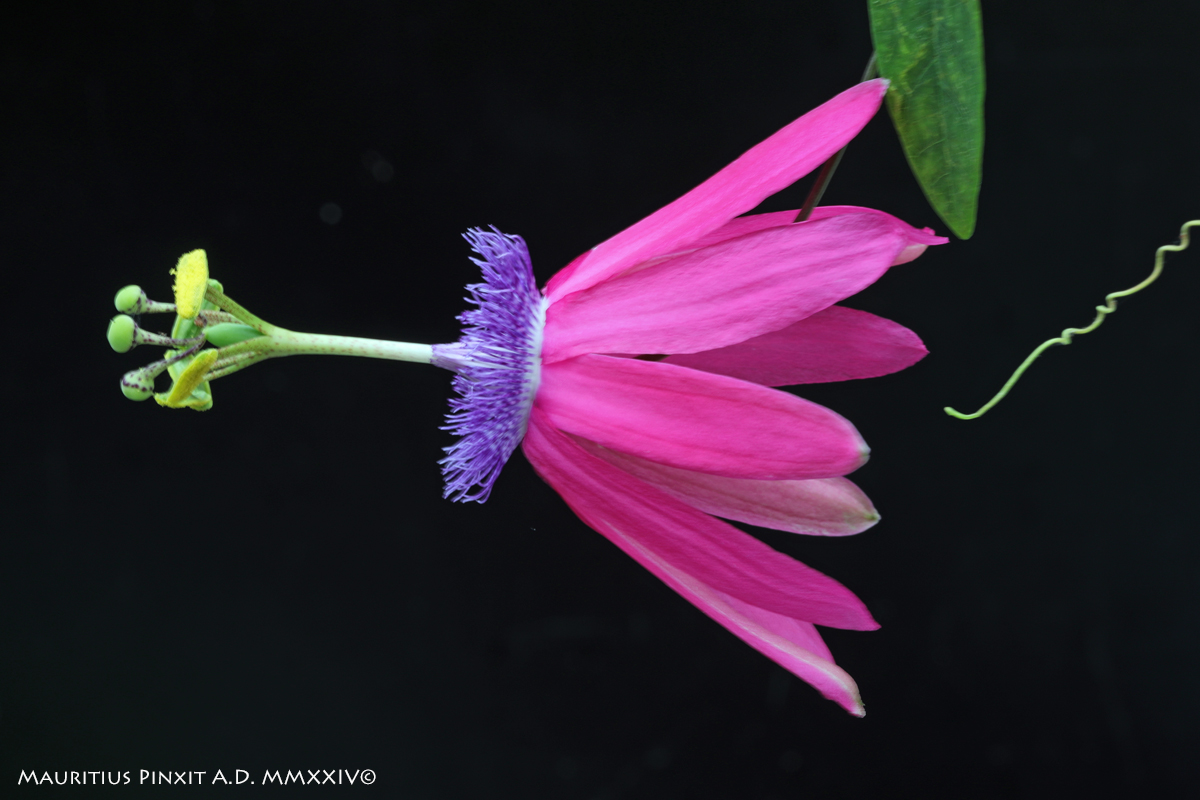
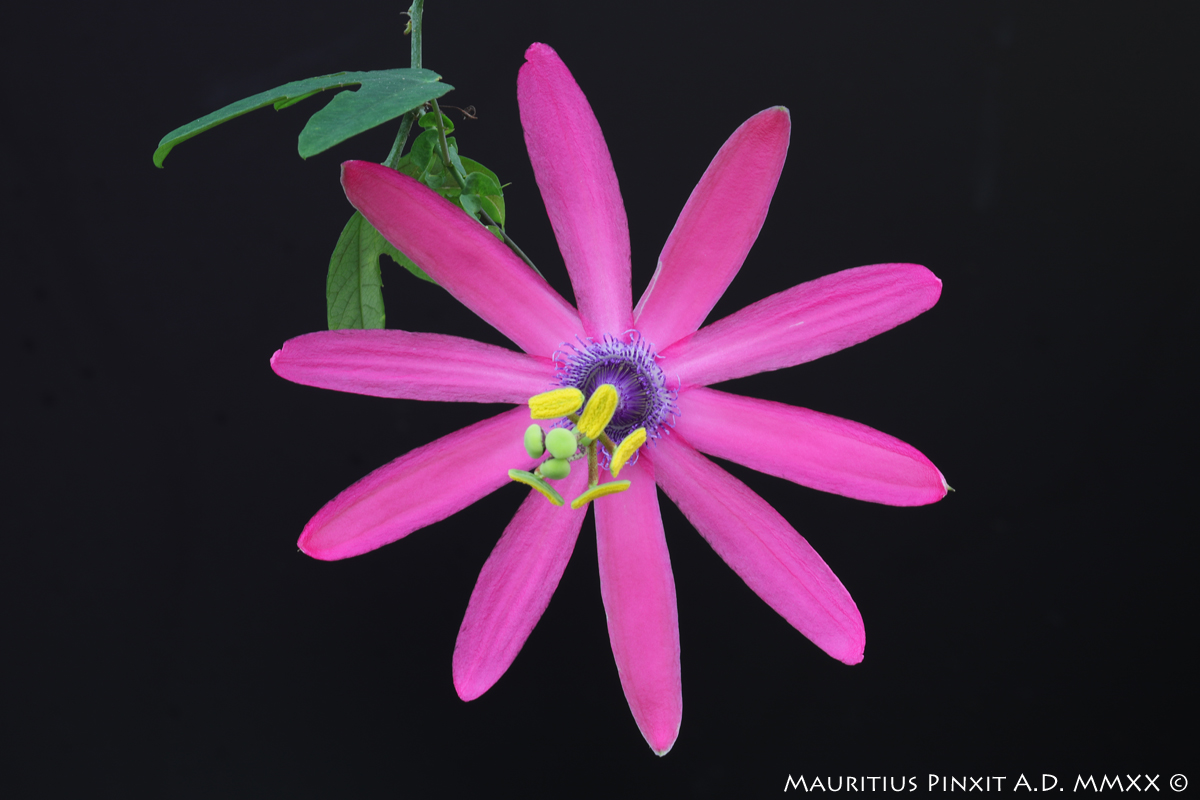
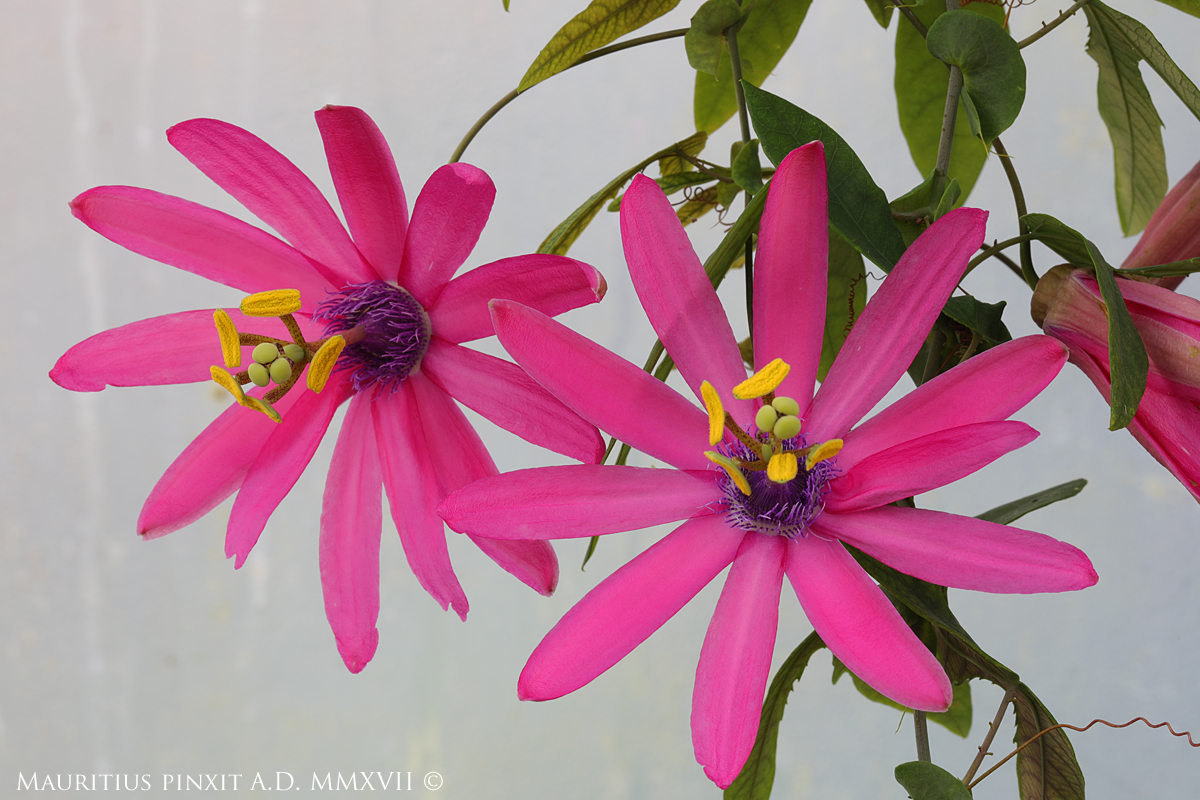
The name kermesina derives from the Latin kermesinus, meaning “scarlet red,” a reference to the pigment once obtained from the cochineal insect. It directly alludes to the vivid coloration of the flowers, which can reach up to eleven centimeters in diameter and are adorned with a delicate, airy corona banded in shades of blue and violet. Unlike Passiflora edmundoi, the corolla of Passiflora kermesina is more open and less reflexed, giving the flower a brighter, lighter appearance. The androgynophore is slender and elegant, clearly visible at the center of the bloom.
Flowering is generous and continuous: even small cuttings can produce buds in succession for weeks, offering a long season of color. At the height of flowering, the contrast between the intense red of the petals and the bright green of the foliage is striking. The leaves, trilobed and delicate, have narrow, deeply divided lobes, with an elegantly carved sinus and finely serrated margins. The petiole bears the usual pair of nectary glands.
Among its pollinators, the butterfly Heliconius ethila narcaea is well known, regularly visiting the flowers in search of nectar. Other tropical butterfly species also frequent Passiflora kermesina, drawn by the flower’s vivid color and open shape, which facilitates access to the nectar.
Cultivation in pots is the safest choice at our latitudes, as the species does not tolerate temperatures below 10 °C. In milder regions, however, it may be worth experimenting with outdoor cultivation, where it becomes a spectacular specimen with long, hanging branches covered in flowers. In pots, it prefers large containers and well-drained soil enriched with pumice and coarse sand. Regular feeding with Osmocote promotes growth and extends the blooming period. Compared to Passiflora edmundoi, Passiflora kermesina bears larger, more vivid flowers, has a lighter foliage, and offers a consistent blooming habit that makes it one of the most cherished species among collectors and enthusiasts of the genus Passiflora.