Passiflora loefgrenii Corupa | The Italian Collection of Maurizio Vecchia

Passiflora loefgrenii Corupa, information, classification, temperatures. etymology of Passiflora loefgrenii Corupa. Discover the Italian Passiflora Collection by Maurizio Vecchia.

Passiflora loefgrenii Corupa | The Italian Collection of Maurizio Vecchia

Systematics (J. Macdougal et al., 2004)

SUBGENUS: passiflora
SUPERSECTION: stipulata
SECTION: granadillastrum


GEOGRAPHICAL DISTRIBUTION OR ORIGIN:

Brazil, State of Sao Paulo. 


CRITICAL MINIMUM TEMPERATURE: 10 °C


IDEAL MINIMUM TEMPERATURE: 15 °C


ETYMOLOGY:

Dedicated to the Swedish botanical researcher Albert Loefgren (1854 - 1918).
Corupà is a Brazilian municipality in the state of Santa Catarina, origin of this form.


PHOTOGALLERY:


DESCRIPTION:

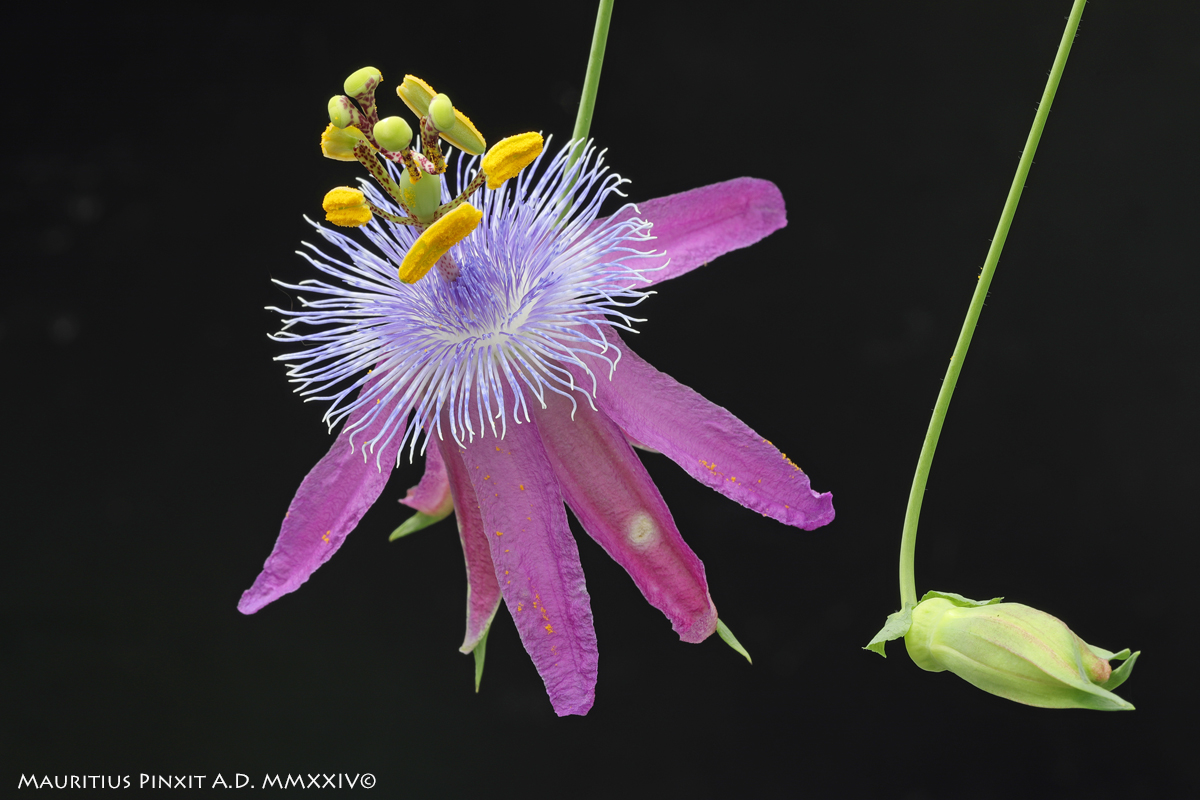
This species always excites the visitors of my collection when they see it in bloom. Its crown of very pale bluish-violet colour is vaporous due to the dense thin filaments arranged in several series and is placed above the corolla with a decidedly intense pink, almost violet colour.  This creates an elegant contrast that intrigues, you remain incredulous and spend minutes in observation to understand if it is a real or fake flower.

In Europe two forms of P. loefgrenii are cultivated. The most widespread is this one, the form 'Corupà'. The second is the form 'Iporanga'. 

The form 'Corupà' takes its name from a Brazilian municipality, part of the state of Santa Catarina from which it comes.

It is a robust and lively liana with smooth and thin stems. The trilobate leaves, supported by a petiole with 3 pairs of symmetrical glands on the petiole itself. The flowers are supported by a pendulous petiole at least 15 cm long.  When opened they face up almost to be admired. The hooked sepals, together with the petals, constitute the corolla and measure about 7 cm. These are followed by numerous oval fruits, characterized by a disgusting smell of rotten garlic. For this reason this species is called 'Garlic Passion Flower'.

It multiplies easily by cuttings and also by seed.

The cultivation is easy because it is a generous plant. It lives outdoors only in the warm regions of southern Italy, elsewhere it is cultivated in pots and is kept in winter.
(REVERSO translate)