Passiflora saxicola
Gontsch. (1927)


SUBGENUS: decaloba
SUPERSECTION: decaloba
SECTION: decaloba (presunta)
GEOGRAPHICAL DISTRIBUTION OR ORIGIN:
Brazil, Bahia.
CRITICAL MINIMUM TEMPERATURE: 8 °C
IDEAL MINIMUM TEMPERATURE: 12 °C
ETYMOLOGY: From the Latin sax, stone as it vegetates in stony places.
DESCRIPTION:
The shape of the leaves of this species is particularly unusual. As is typical of the species assigned to the Subgenus Decaloba, they are distinctly transverse and bilobed. Not only that: they resemble two slightly elliptical circles that approach one another, touch, and then merge together for a short distance. The texture is leathery, the surface glossy, and the colour a uniform dark green.
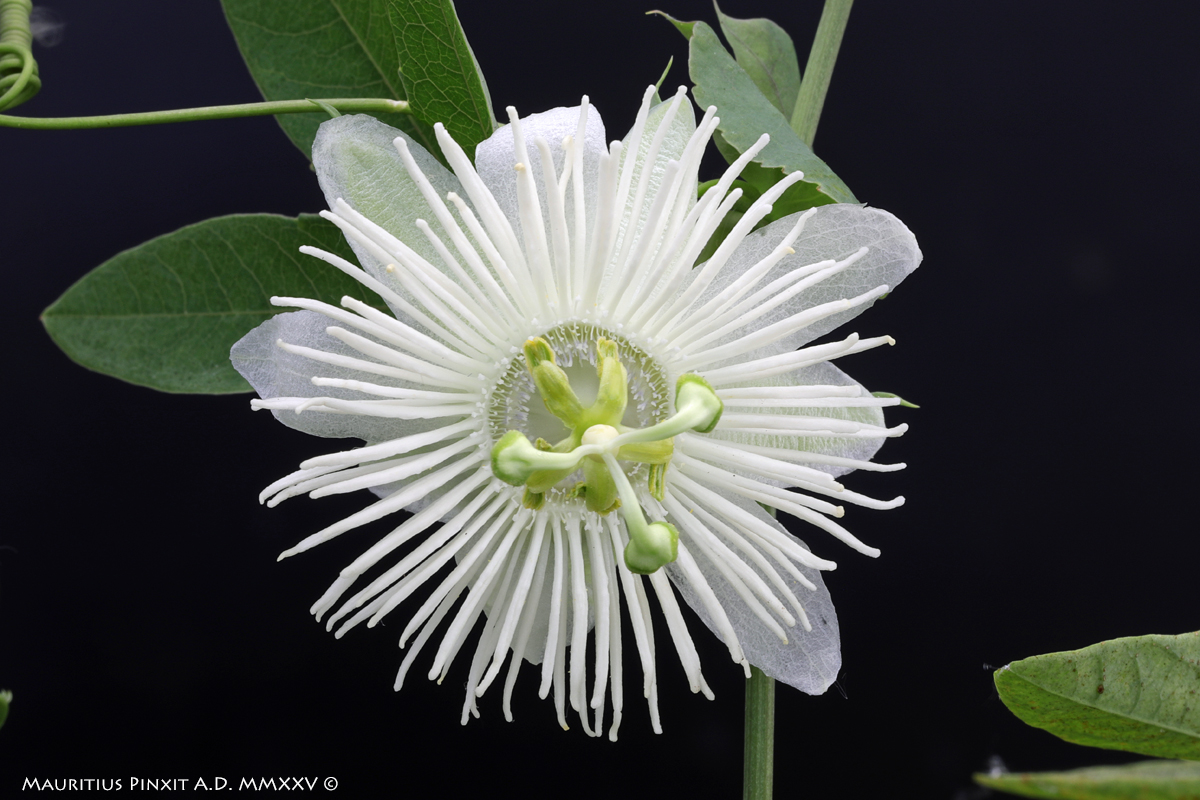
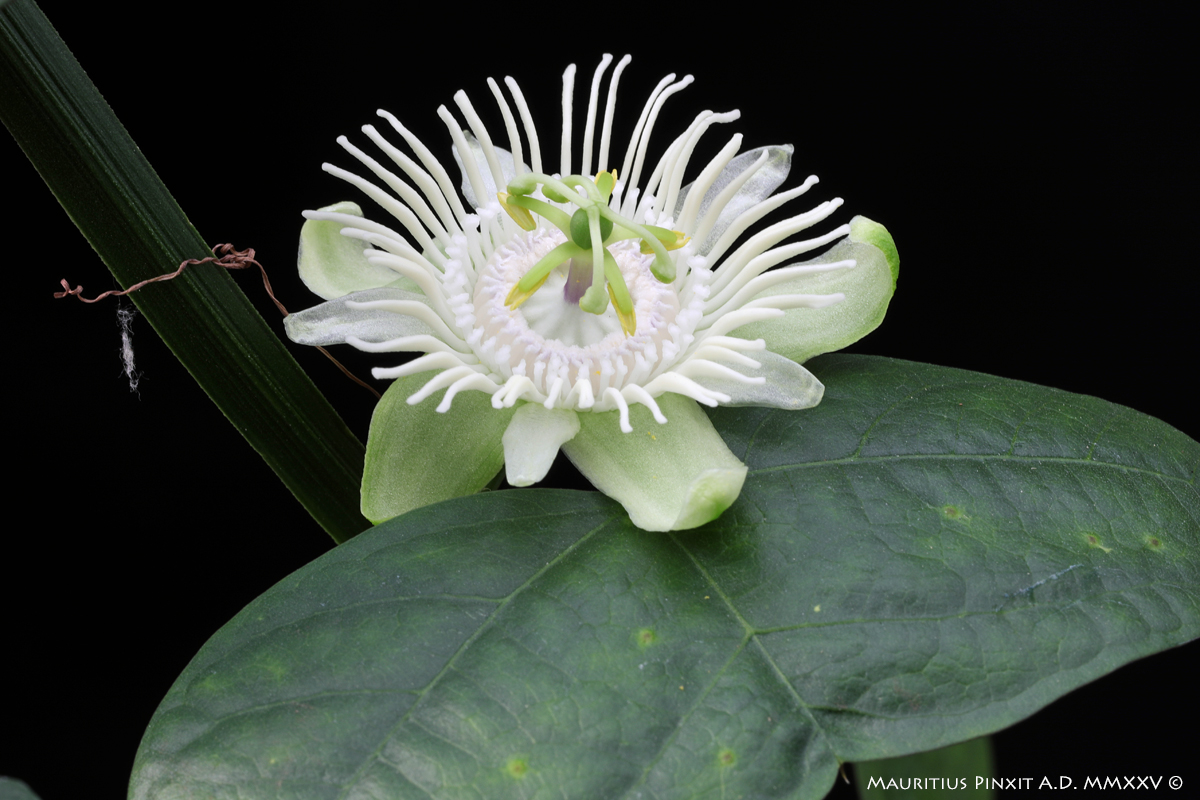
The flowers are less modest than those of other related species, as they are more robust, compact, and bright. The corolla is white with slight greenish shades, but what truly characterises it is the corona, composed of two series of white filaments, thick and clearly visible.
The first series almost entirely covers the corolla, which consists of sepals and reflexed petals. The other, more internal, with very short filaments, is arranged vertically around the androgynophore.
The stem also has an unusual form, as it is flattened and striped on the surface, similar to that of Passiflora misera, to which it is related.
Passiflora saxicola is a species endemic to Brazil, found in the states of Mato Grosso, Goiás, Paraíba, Bahia, and Rio de Janeiro. It grows in savannah environments and in plant formations influenced by the marine climate, generally in areas characterised by herbaceous or shrubby vegetation and sandy soils. It flowers in February, March, from May to July, October and December, while fruiting occurs in May, July, October and November.
The epithet saxicola refers to the rocky and sandy substrate of the place where the type specimen was collected. Its description was established, together with numerous other species, by Milward de Azevedo and collaborators in the publication A taxonomic revision of Passiflora subgenus Decaloba (Passifloraceae) in Brazil, which appeared in Phytotaxa.
In cultivation it is an easy species and particularly floriferous. It should be grown in a pot and requires winter protection in most Italian regions. It tolerates a poor and sandy compost well, which provides the necessary drainage.
Multiplication is simple both by cutting, which roots readily, and by fresh seed in a sandy, well drained substrate.